Share on LinkedIn
7 October, 2026
Posted: 14 September, 2026
The Humanities in the European Research Area (HERA) is a collaborative partnership of 26 national research funding agencies from 25 European countries. In summer 2026, two AHRC interns, Princess Kunadu and Sammy Morgan, explored the long-term impact of UK involvement in HERA-funded research by contacting project leads to gather stories about what their research has achieved since completion. The team developed six responses into stories highlighting the lasting value of European collaboration.
Learn more about the process of collecting the stories
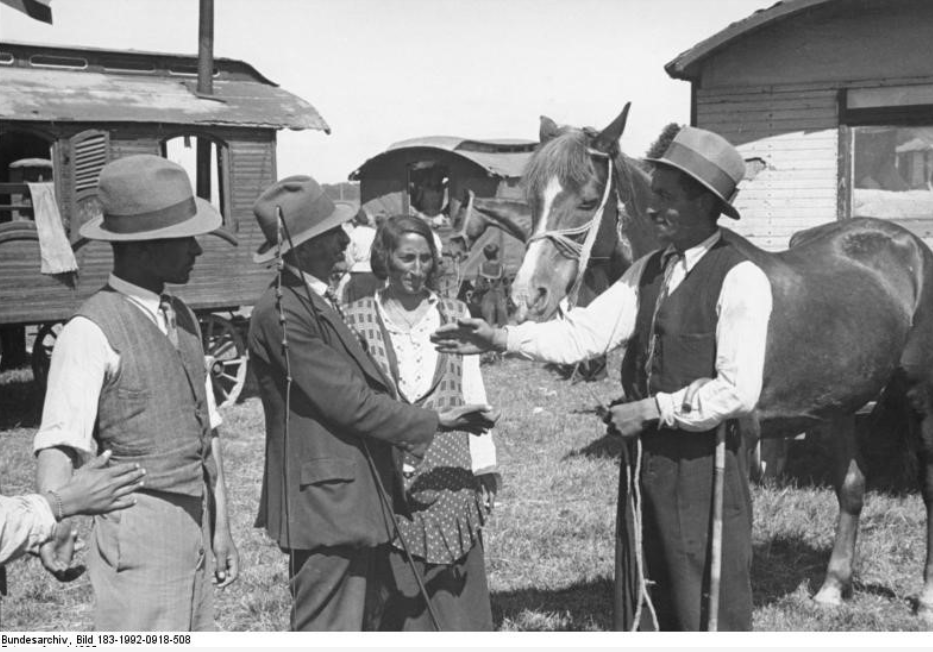
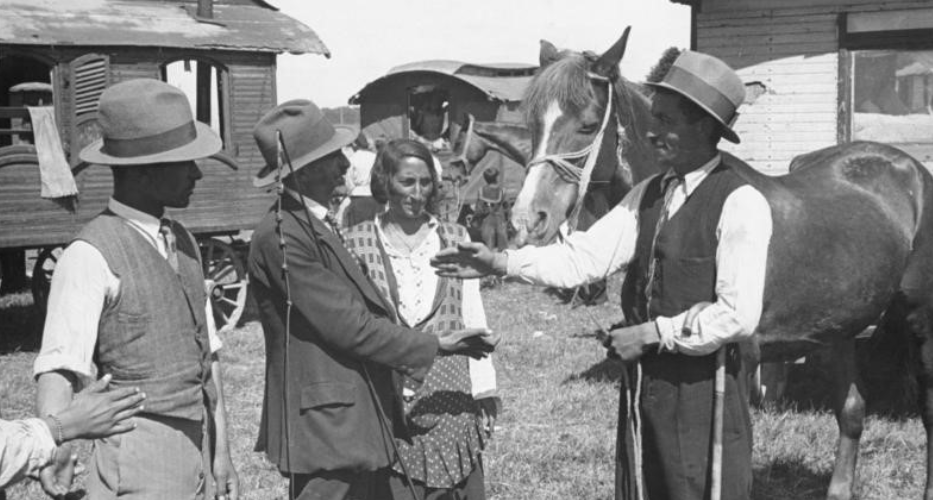
Credit: German Federal Archives (Bundesarchiv), categorized under image ID Bild 183-1992-0918-508.
Led by the Universidad de Sevilla, BESTROM (Beyond Stereotypes: Cultural Exchanges and the Romani Contribution to European Public Spaces) brought together academics and non-academics from Spain, Poland, Finland, and the UK to investigate how Romani communities have shaped Europe’s public, cultural, political, and economic spaces since the nineteenth century.
A key aim of the project was to improve public understanding of the discrimination and persecution experienced by Sinti and Roma communities whilst highlighting their agency, resilience, and contributions to wider society. BESTROM created publications aimed at both academic and non-academic audiences to bring previously overlooked stories into public view. This included a volume of case studies that can support the inclusion of Romani history and can be used in schools. BESTROM also used theatre to share their findings, collaborating with the University of Bremen to produce a stage production on the policing and harassment of German Sinti and Roma around the turn of the 20th century. This production led to much conversation, attracting considerable public attention and provoking debate, whilst creating opportunities for regional Sinti organisations to engage directly with wider audiences.
The UK portion of the project, led by Professor Eve Rosenhaft at the University of Liverpool, focused on economic spaces. Advancing knowledge around Romani horse traders and their role in fairs and markets across Britain and Germany, they explored how everyday interactions between Romani and non-Romani communities contributed to the development of local economies and public life. Their study revealed how Romani participation in horse trading influenced urban development in Germany and how Romani families contributed to the growth of tourist economies in places such as Blackpool, where Romani fortune tellers became a recognised part of the tourist experience.
The project challenged long-standing stereotypes by showing that Romani history is not a marginal or separate history, but a key part of European, national, and local histories. BESTROM used a biographical approach, focusing on the life stories, experiences and personal timelines of individuals, to create detailed case studies of trading families and demonstrate how horse markets served as vital spaces where Romani and non-Romani people had mutual respect and engaged on relatively equal terms regarding both economic exchanges and social interactions.
BESTROM’s legacy continues through sustained European partnerships and new research investment, including a €600,000 collaborative project funded by AHRC and DFG (The German Research Foundation) on Romani migration between Germany and Britain. The project has been able to make significant changes and political breakthroughs such as the formal launch of the new standing forum for discussion and policy making on issues affecting the Sinti and Roma communities in Lower Saxony, Germany.
By placing Romani experiences at the centre of European history, this project has helped to improve lives of the underrepresented by creating more inclusive historical narratives and a greater public understanding of Europe’s diverse past.
Professor Eve Rosenhaft | Liverpool University | [email protected]
Written by Princess Kunadu