
RURALEX: Knowledge in Crisis – The Dynamics of Environmental Expertise amidst Rural Change
RURALEX: Knowledge in Crisis – The Dynamics of Environmental Expertise amidst Rural Change
Across Europe, rural regions have experienced significant demographic and land-use shifts, including urban out-migration and the abandonment of traditional agricultural practices. These changes have contributed to a growing crisis: ecological expertise and awareness are rapidly transforming and, in some cases, being lost. This includes knowledge held by everyday practitioners—such as farmers, hunters, and fishers—as well as by institutional “experts,” including policy-makers and scientists. Practices such as controlled burning for wildfire prevention in mountain regions or the crafting of artisanal single-log boats for river navigation illustrate forms of environmental knowledge that are deeply embedded in local landscapes yet increasingly under threat. Although often intangible and difficult to quantify, such knowledge loss has profound implications for European societies and ecosystems.
Specific objectives
- Examine historical and contemporary transformations of environmental knowledge in diverse rural European regions.
- Document both implicit (intangible) and explicit (tangible) ecological expertise among local communities and professional experts.
- Conduct long-term qualitative fieldwork, including interviews, participant observation, archival research, and oral histories.
- Develop and apply an innovative methodological framework, including “multi-species deep mapping,” to capture memories, sensory experiences, and more-than-human relationships.
- Demonstrate how long-held and recently acquired environmental knowledge can address pressing rural social and ecological challenges.
- Highlight the contribution of humanities disciplines, particularly anthropology and history, to understanding and responding to Europe’s environmental future
Achievements
Since the beginning of the project in May 2025, all project partners have been in close dialogue through monthly meetings and online training sessions, beside the HERA-CHANCE kick-off meeting in Nottingham. Notable consortia milestones include planning and delivery of core year one training events: an online session on “deep mapping” with guest researchers Paolo Gruppuso (Rachel Carson Center) and Anna Anna Barcz (Polish Academy of Sciences), and three special sessions coordinated by members of the RURALEX team on Microphenomenology, Methodological comparison in Anthropology, and Moral ecologies. All year one targets have been met, with participatory research in progress with engaged APs in each country, and creative research methods planning underway.
Additionally, individual teams have engaged in a range of activities to deepen their relationships with APs, networks and communities of practice, this includes:
– A public event in Italy with the local AP (the Vallarsa Ethnographic Museum).
– Attendance at IUCN France, workshop on Les Journées du Libre Evolution at UNESCO, Paris. This proved a valuable networking opportunity to meet environmental actors and policy makers and provide rich wider European context for our work (see: https://www.youtube.com/watch?v=UrmPfNXvVZo).
– Coordination meetings with the local AP in the Catalan Pyrenees (CTFC) to develop future collaboration plans.
Besides those key events, project members have all been involved in data collection and have shared project-related research at conferences and workshops, through podcasts, and in local news.
The first project workshop is set to take place in Bucharest, Romania, on April 16-18. All project partners are expected to attend.
News to be highlighted
A key milestone achieved was the creation of the RURALEX website: https://www.ruralex.eu/.The website presents the project’s main research questions, introduces the team members, and showcases the case studies conducted across the seven countries represented in the consortium.
A RURALEX panel has been accepted at the forthcoming Conference of the European Association of Social Anthropologists, which will take place in July in Poland: https://easaonline.org/conferences/easa2026/
The UK team are presenting a paper at the More Than Human (MOTH) Festival of Ideas in London (May 14-16), co-authored with associated partners, Lewes Railway Wildlife Trust. See: https://mothrights.org/moth-festival/.
The UK team have been included in a bid submission to Natural England by partners Knepp Wilding and Sussex Wildlife Trust to support the socio-cultural evaluation of free-living beaver release in the area through the methodology they are developing as part of the RURALEX project.
Consortium/ partners
Project Leader: Roger Norum, University of Oulu, Finland
Alessandro Rippa, University of Oslo, Norway
Stefan Dorondel, The Institute for Southeast European Studies, Romania
Camila del Mármol, University of Barcelona, Spain
Kadri Tüür, Tallinn University, Estonia
Alice Eldridge, University of Sussex, United Kingdom
Associate partners:
Antoni Trasobares Rodríguez, Director, Forest Science and Technology Centre of Catalonia, Spain
Giuseppina Daniele, President, Vallarsa Ethnographic Museum, Italy
Helge Bruelheide, Director, Halle-Wittenberg Botanical Garden, Germany
Jordi Abella Pons, Director, Ecomuseu de les Valls d’Àneu, Spain
Liina Veskimägi-Iliste, Chairwoman of the Board, Estonian Folk Art and Craft Union, Estonia
Luis Ovidiu Popa, Director of Research, Grigore Antipa Natural History Museum, Romania
Pentti Marttila-Tornio, Group Leader, Kiiminki River Catchment Area Association, Finland
Sarah King, Rewilding Manager, Rewilding Britain, United Kingdom
Susanne Grießbach, Director, Haus am See Information Center for Environment and Nature Conservation, Germany
Sébastien Moncorps, Director, IUCN French Committee, France
Virginia Maria da Silva Neto, Director, Francisco de Lacerda Museum, Portugal
More information:
https://www.ruralex.eu/
 Share on LinkedIn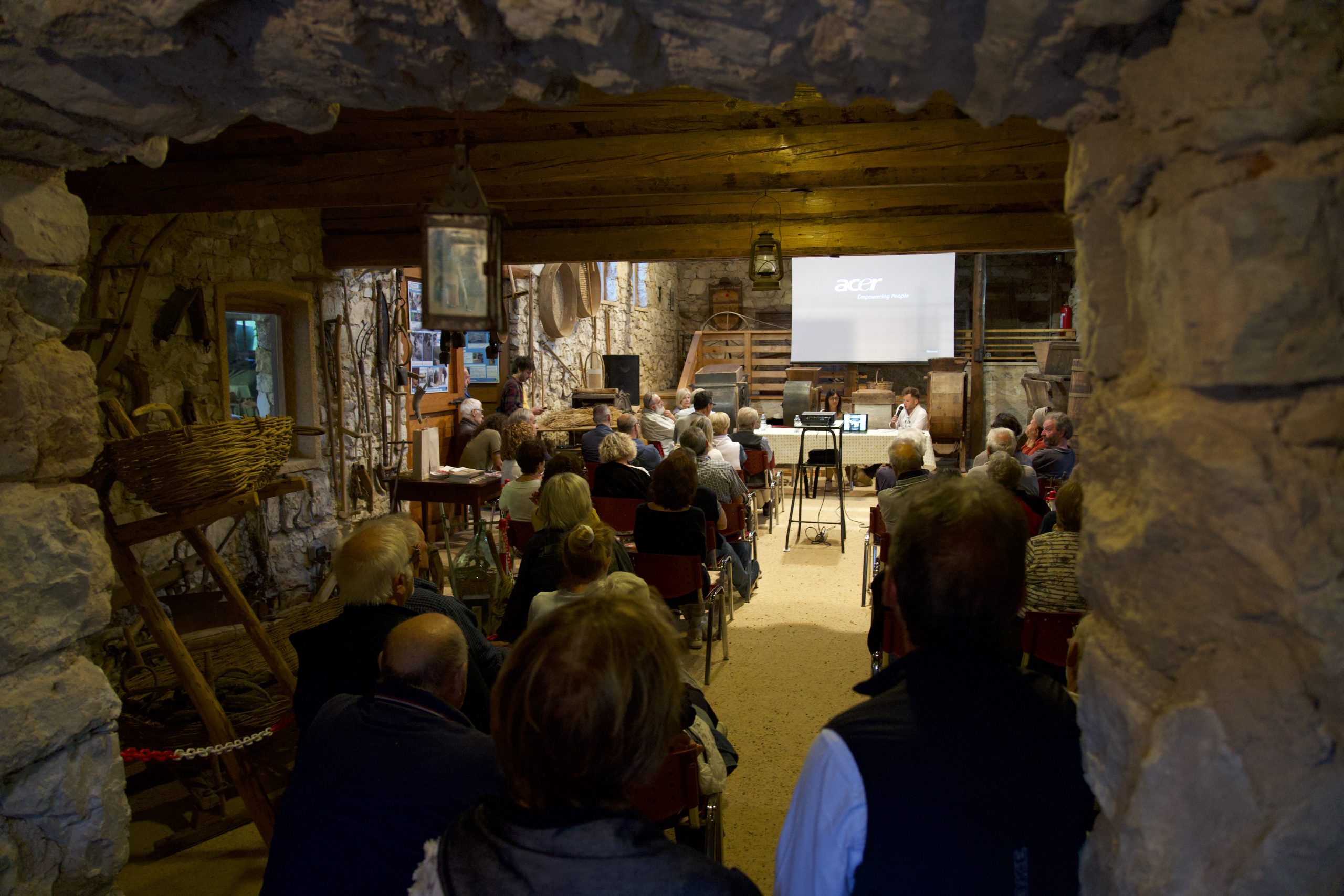
Museo Vallarsa event