
CoastARTS: Coastlines as Zones of Ecocultural Crisis – Shaping Resilience through Transnational Performance-based Arts
CoastARTS – Coastlines as Zones of Ecocultural Crisis: Shaping Resilience through Transnational Performance-Based Arts
CoastARTS treats Europe’s coastal areas and their former colonies as rich sites for exploring the intersection of ecological and cultural crises. By combining performing arts practice with research, the project investigates how historical crises and looming environmental threats shape human and multispecies communities. It aims to recover neglected ecological knowledge, foster resilience, and develop adaptive responses to planetary change.
Specific objectives
- To use performing arts as a research and engagement tool for understanding and responding to ecological and cultural crises along coastal regions, creating knowledge and practices that strengthen community resilience through:
- Conducting archival and practice-led research to identify transhistorical, cross-cultural, and transregional ecological knowledge.
- Working with museums, festivals, arts centres, theatre-makers, and coastal communities to develop new approaches for understanding coasts as zones of crisis.
- Exploring how coastlines—as sites of disembarkation, erosion, inundation, invasion, and contestation—inform both historical and contemporary imaginaries of crisis.
- Co-creating performances, exhibitions, and digital resources with cultural partners, making research accessible to public audiences.
- Developing methods and models for performing arts that can be applied across disciplines to enhance understanding of ecological and cultural crises.
Achievements
In its first year, CoastARTS has prioritised building relationships with local collaborators and communities as part of creative, multiphase practice-led research addressing coastal crises. Three postdoctoral researchers have been recruited to the consortium, working with teams in the UK, Ireland and Spain, respectively. In addition, four new Associate Partners have joined the Norway team, increasing outreach and potential impact, particularly among schoolchildren. The team has set up artist-in-residence projects at LABoral in Gijón (Spain) and the National Maritime Museum in London, and will soon welcome Teresa Hernández from Puerto Rico and Jessie Kleemann from Greenland to these posts. Across the consortium, public-facing events co-hosted with cultural sector partners have so far engaged approximately 350 participants in arts-based activities designed to raise awareness of climate change and other environmental crises that disproportionately affect coastal zones. Puppetry has emerged as one important method for the project’s exploration of more-than-human perspectives on coastal crises, and several CoastARTS researchers are developing creative and critical research in this field, including in liaison with The Herds, an international public art project staged in various locations on an epic journey from Central Africa to the Arctic via a number of European locations.
News to be highlighted
In 2025, CoastARTS convened two 4-day Research Integration Workshops (RIWs), each focused on cross-disciplinary dialogue and sharing of research methods among consortium members. These events also featured contributions from external cultural and scientific experts knowledgeable about environmental challenges specific to each workshop’s theme. RIW1 unfolded in Bødo and Røst (in Norway’s central coast region) and focused on the theme of Ecocultural Identity with a particular emphasis on human–avian relations and increasing threats to coastal bird populations. RIW2 took place in Greenwich, London, in association with the National Maritime Museum and explored the concept of localities, especially in relation to urban estuarine environments. The third of the project’s five workshops will be hosted in Coimbra, Portugal, in April 2026, with a focus on coastal erosion and cultural heritage. RIW4, scheduled for Galway (Ireland) in October 2026 explores coastal crises in the context of migration, while the final event in the series, to be held in Oviedo in early 2027, will concentrate on the arts of resilience as they apply to coastal crises.
Consortium/ partners
- Project Leaders: Helen Gilbert, Royal Holloway University of London, UK; Patrick Lonergan, University of Galway, Ireland
- Anne Meek, Kultur og teaterverkstedet Fyret, Norway
- Christine Plastow, Theatre of the Gentle Furies, UK
- Dara McGee, Áras Éanna, Ireland
- Eithne Verling, Galway City Museum, Ireland
- Helen Mears, National Maritime Museum (Royal Museums Greenwich), UK
- John Crumlish, Galway International Arts Festival, Ireland
- José Luis R. Gallego, University of Oviedo, Spain
- Luís Ferreira, Associação Viver Em Alegria, Portugal
- Michael Walling, Border Crossings, UK
- Semíramis González, LABoral Centro de Arte y Creación Industrial, Spain
- Ramón H. Rivera-Servera, Puerto Rican Arts Initiative, USA
- William Dwyer III, Trondheim International School, Norway
- Neide Areia, Centre for Social Studies, University of Coimbra, Portugal
- Emilia María Durán Almarza, University of Oviedo, Spain
- Heli Aaltonen, Norwegian University of Science and Technology, Norway
- Jarle Skaug, Nesna Barnehage, Norway
- Elisabeth Ulsund, Steiner School Rotvoll, Trondheim, Norway
- Leangen Kulturbarnehage, Nesna, Norway
- Anne Lise Wie, Teaterzahl, Nesna, Norway
- Wenche D Tingstad, Leangen kulturbarnehage, Nesna, Norway.
 Share on LinkedIn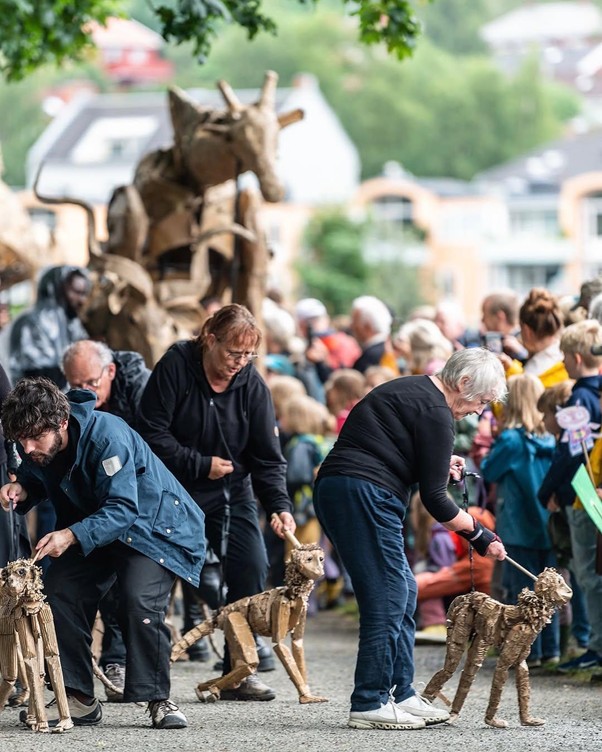
THE HERDS, an international public art puppet project
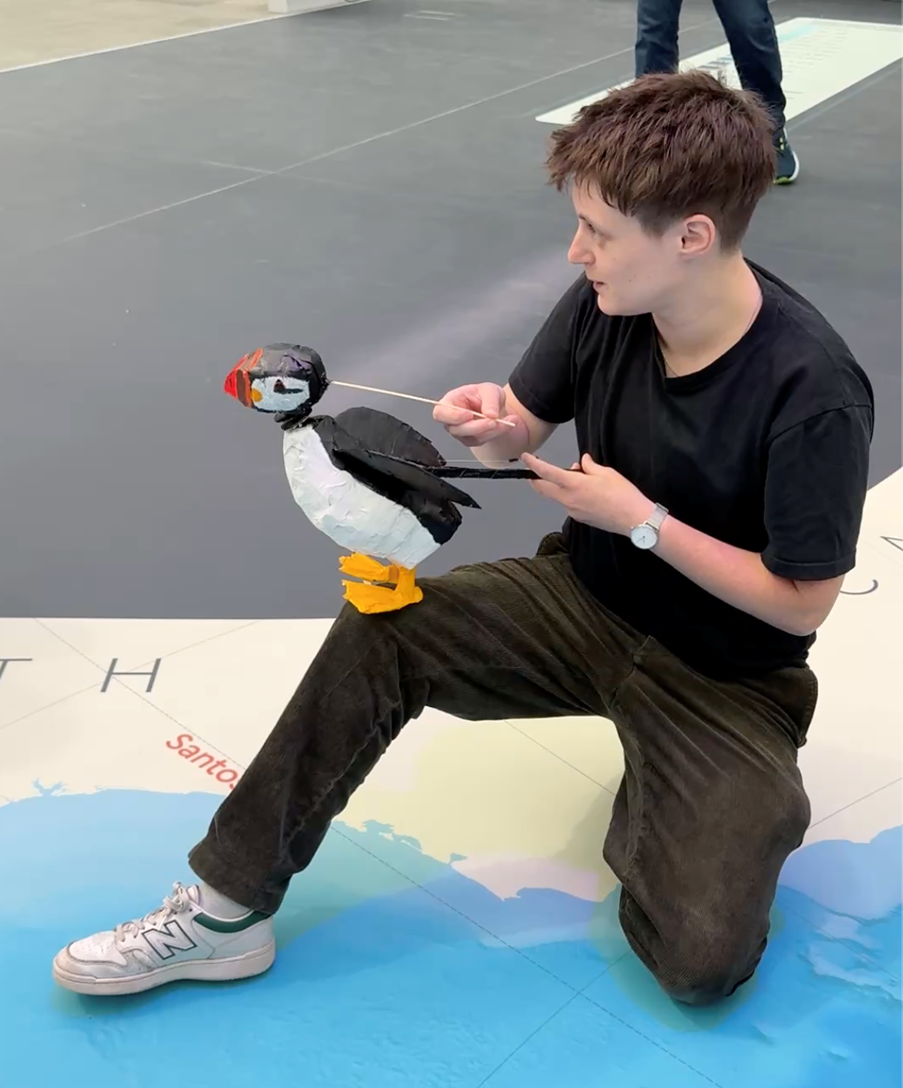
CoastARTS puffin puppet workshop at National Maritime Museum in London